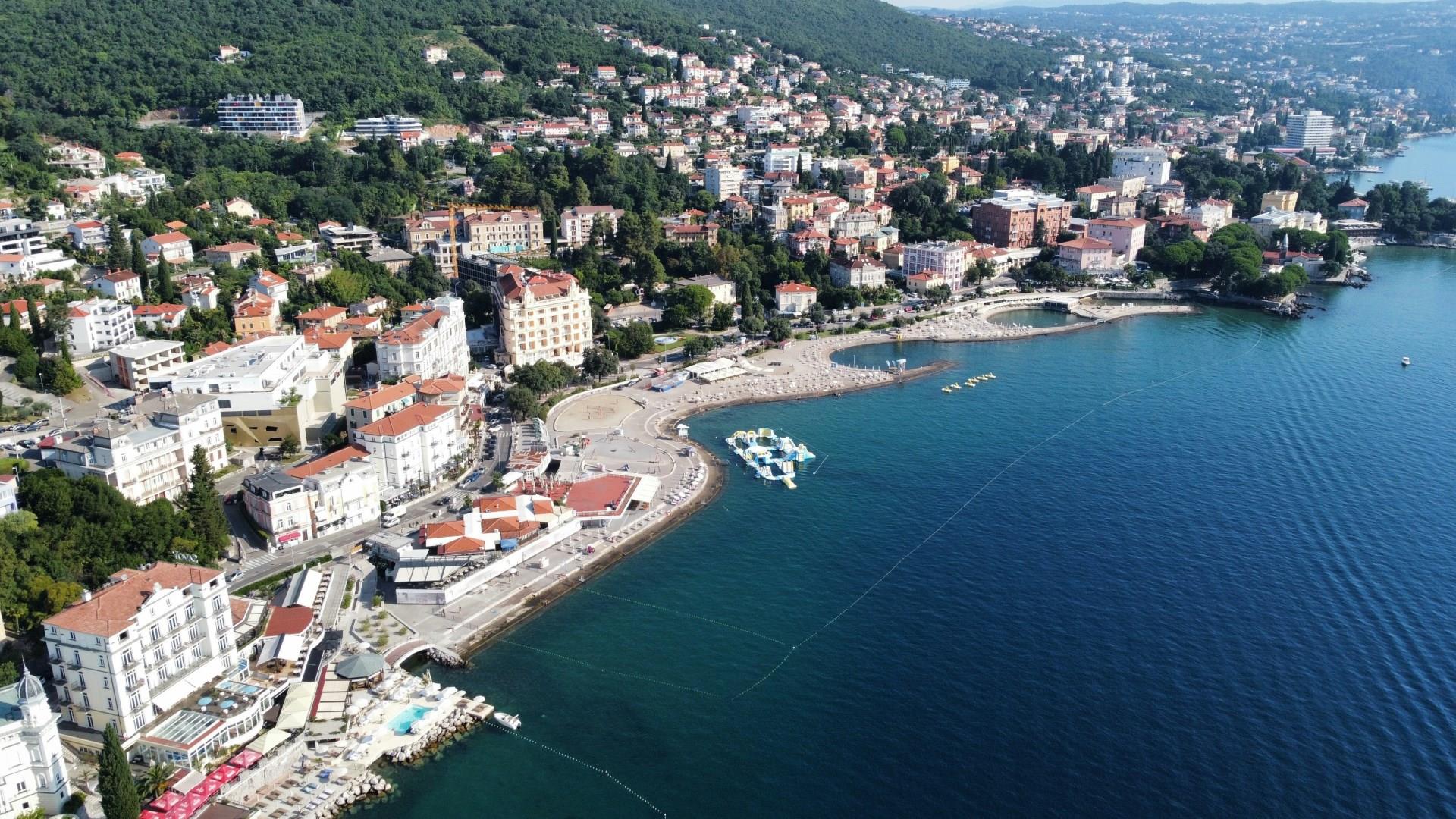
Opatija, located on Croatia’s Kvarner Bay, has been drawing visitors since the 19th century, when Austro-Hungarian aristocrats built grand villas along its Adriatic shoreline. Today, many of those same buildings still stand with some restored as luxury hotels and others preserved as cultural landmarks. The town’s most recognizable structure, Villa Angiolina, opened in 1844 and marked the start of Opatija’s rise as a fashionable seaside resort. It now houses the Croatian Museum of Tourism, offering insight into how the town evolved from a quiet fishing village into a health and leisure destination.
The Lungomare, a seaside promenade stretching for 12 kilometers, connects Opatija with nearby coastal towns like Lovran and Volosko. Originally built in 1911 for imperial guests to take sea air without leaving the safety of a paved path, the Lungomare remains one of Opatija’s most scenic features. Along the way, visitors pass rocky coves, sculptures like the famous Maiden with the Seagull, and gardens filled with Mediterranean plants. It's particularly popular around sunset when views across the bay toward Rijeka and the distant islands become most vivid.





































































































































































































































.jpg)


.jpg)



.jpg)





.jpg)